I am sixteen, standing in the dark space between two black curtains where I know the audience cannot see me because I cannot see them. Outside it may be unseasonably warm for December, but here in the theater, it’s starting to snow.
Backstage smells like hairspray and adrenaline. I stay moving to keep my feet warm, alternating between small jumps and relevés to the bright sound of flutter-tongued flutes in Tchaikovsky’s Waltz of the Snowflakes as I wait for my cue. The stage lights are stark and hot, and soon I will gleam beneath them in my white tutu with its jeweled bodice.
“Good luck!” someone whispers, and a quick flurry of nerves runs down my spine. Other dancers flurry across the stage in swirls of white tulle as I press up onto my toes and bourrée in place, soundlessly pummeling the black Marley floor with the tips of my shoes preparing for my big entrance.
There is no greater high than this. It warms and burns like a shot of whiskey and I am too drunk on the thrill of performing—and of the brown-eyed boy I know is in the audience, who will soon watch me do what I do best—to grasp how few of these moments I have left.
• • •
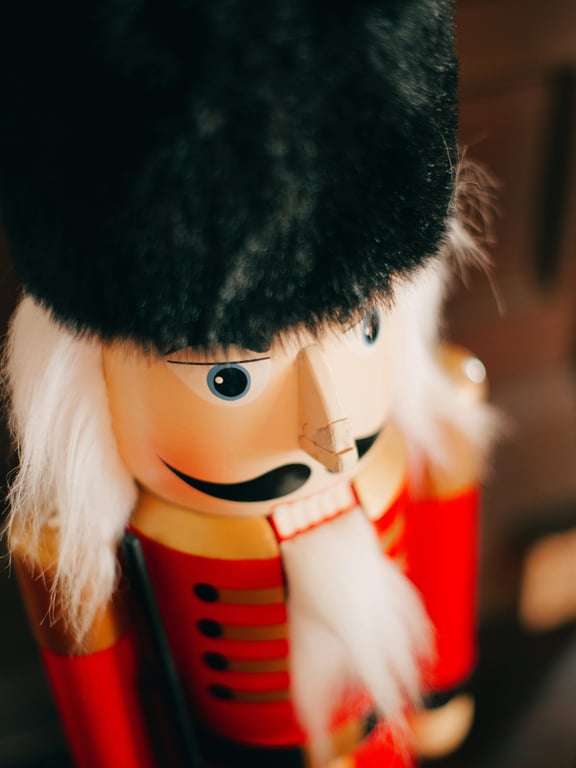
I was eight when my mom signed me up for my first real ballet class, as in the kind that got to perform in our studio’s annual rendition of The Nutcracker. Come fall, my class would be assigned the Waltz of the Flowers and we would learn our choreography as the corps of miniature lilac- and melon-colored blossoms behind the Dew Drop Fairy.
It was my first taste of obsession and soon, I became the girl who practically lived at the dance studio after school; who choreographed living room battle scenes as Clara and the Mouse King with friends in the heat of July, and fell asleep to her Nutcracker CD three hundred and sixty five days a year. In high school, I spent my summers away from home at intensive training programs. I’d come back sharpened like a pencil, just in time for Nutcracker auditions.
This silly seasonal ballet became my sun, and I stayed firmly in its orbit all year long—longing not just for the performances, but all of it. The drives with my parents back to the studio the morning after auditions, sweaty-palmed and searching the cast list for my name. Writing out “Snow Queen” in puffy paint in my best handwriting on the back of my “CAST” tee shirt with the other girls. Costume fittings and long rehearsals at the theater on school nights, final bows with raucous applause.
But if I’m honest, for as much as I loved the Nutcracker, I also loved feeling exceptional. By ballerina standards I had too many curves, mediocre feet and a sub-optimal leg line and somehow, at my small-town studio it didn’t matter. Not really. I kept ascending, moving up into classes with the older girls and landing lead roles.
I felt special. I was special, in that insular little world. So much so that I started to believe my own hype, as if this might all turn into something real.
• • •
After the show I greet friends and family in the bright light of the lobby, exchanging hugs and juggling armfuls of carnations wrapped in cellophane. They offer kind words and I thank them for coming, but only with half my attention. The other half is scanning the room, the theater entrance, the landing just beyond the glass doors with the focus of a laser.
Soon the crowd thins, theatergoers return to their cars and dancers return to their dressing rooms to change into sweats for lunch between shows. That’s when he finds me.
The brown-eyed boy and I stand facing each other in the aisle of the empty auditorium, the two of us parting a sea of red velvet seats. “Thanks for coming,” I say as if he isn’t mostly there to see a close friend perform—as if he’s there only to see me. He flashes a warm smile and mercifully, the low house lights hide the hot rush of blood to my cheeks when he hands me a single rose. Yellow. “You were really great.”
In 2025 Google is quick to confirm what I already know in my heart of hearts: a yellow rose is a classic and beautiful option, especially for a first recital or for a friend. But back then I saw what I wanted to see.
For two years, I kept that flower in a glass bud vase on my dresser like something holy. Two years of mixed signals and glimmers of false hope: the nights we’d meet for a late coffee when I should have been in class. The time I worked up the nerve to ask him to prom and he said he wanted to wait, see what other options he had. The time he kissed me in secret. The rose browned, dried, stank in my room and still, I held on. Can you blame me?
The word limerence is new to me, but apparently I’ve been speaking its lopsided language for much of my life. Coined by psychologist Dorothy Tennov, it means a state of being intensely infatuated without clear reciprocation. When we idealize the object of our affection, ignoring its flaws and longing for something that flows both ways.
I first fell for ballet when I was too young to understand how cold and cruel it could be. By high school, I loved it the way you love a bad boyfriend: a little too eager, swept up in what could be and quick to forgive bad behavior. I knew we had no real future together but hung around waiting for it to change its mind about me anyway, warping my feet under the sofa to achieve higher arches (it did not work) and using my college fund to pay for summer programs meant for young dancers on a professional track.
At my hometown studio, I remember a substitute teacher approached me one time after class, all willowy limbs and good intentions. “You’re really talented,” she said, sincerely. “It’s a shame with your body, you’ll never have a professional career. Maybe corps de ballet somewhere, at best.”
It’s a brutal thing to say to a young dancer still clinging to hope, even the delusional kind. But she wasn’t wrong. A few months later, I landed the lead role of Clara in what would be my final Nutcracker as a graduating senior, the last time I would ever wear pointe shoes on stage.
To this day, my body can’t help but free-associate memories of performing anytime I hear Tchaikovsky. I remember one Saturday night last Christmas my husband and I sat by the tree watching The Crown, the episode where Diana surprises Charles for his birthday at the opera house. I caught a few familiar notes from Swan Lake in the opening scene, and something between my ribs came a little undone.
My husband pressed pause and left the room at one point, and I took the opportunity to stretch my legs. One moment I was topping off my glass of Bailey’s in the empty kitchen and the next, my fingertips had found the refrigerator handle at the same familiar height as a ballet barre and there I was: drawing half moons on the floor with pointed toes,mywool socks hugging the arches of my feet like old friends. The sound of footsteps coming down the stairs brought me back, and I shapeshifted back into a woman standing in front of the fridge looking for a snack.
The strange truth is my husband will never know me as a dancer. To many who knew me in high school that’s practically all I was. But in my marriage, to my adult friends, that part of me is a ghost.
I’ve tried going back, finding adult ballet classes at local studios and optimistically buying a class pack. It’s not the same. The few times I did dust off my slippers and brave the wall-size mirror it felt less like a homecoming, and more like returning to your childhood home to find they turned it into a Starbucks.
• • •
I know I’m lucky to have so little experience with death at this stage in my life, though I know that will change. My therapist and I talk about the ways I dress-rehearse grief as I keep telling myself the story that I’m a stranger to loss, worrying what it will eventually do to me.
But then I get sucker punched by something unnameable anytime I see a Nutcracker themed display in a store window, forget to breathe when I catch the tail of an old backstage memory and I think: is this not its own kind of grief?
It’s a strange thing to put something at the center of your life for so many years, and then one day realize it’s done with you. Gone. Just a purpose-shaped void in its place and all you can do is miss it.
The dress rehearsals, pre-show butterflies, time in the spotlight, but not just that. I miss the sweat of class and the sting of corrections. The way I got to experience my body like an instrument, finely tuned and full of song. The way it felt to keep ascending, keep striving, as if the road ahead of me was long and full of possibility.
Ballet and I never had a real future together. Maybe it’s embarrassing that it felt real to me, that I let myself love it anyway. I don’t mind. I suspect I’m not done holding onto dead roses, either—not because I’m delusional, but because I want to be the kind of person who saves a seat for hope. Who lets joy reach its full wingspan, even if it was never meant to last.
As long as the memories keep knocking, I will keep opening my door. I will keep replaying the New York City Ballet’s Waltz of the Flowers on YouTube, knowing it will break my heart a little. I will let it knock the wind out of me when I dance in dark kitchens and find a familiar shape I was sure my body had forgotten. Again and again I will devour the documentary, feel the ache as I root for a new batch of talented young dancers in the big city, trying to make it.
I publish more essays like this on my Substack newsletter, Muscle Memory.

 Made with Bullet